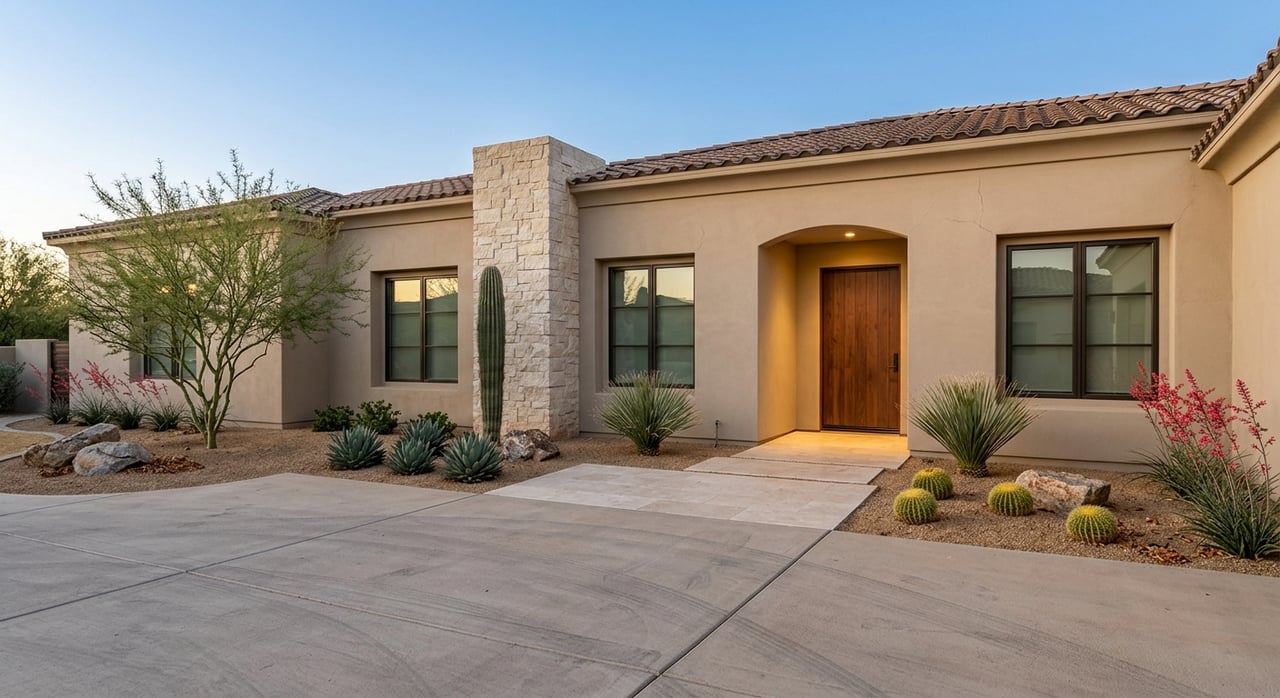
Thinking about moving to Scottsdale from another state? It can be exciting, but it also comes with a few big decisions that are easy to underestimate. From choosing the right part of the city to planning around heat, commute patterns, and housing options, a smart move starts with local context. Here’s what you should know before you make your next step in Scottsdale.
Start With Scottsdale’s Size and Price Point
Scottsdale is not a one-size-fits-all market. The city spans 184.5 square miles and stretches 31 miles north to south, which means your experience can vary a lot depending on where you land.
That matters even more when you are relocating from out of state and trying to choose a home from a distance. A neighborhood that looks close on a map may feel very different once you factor in drive times, lifestyle preferences, and day-to-day routines.
You should also go in with a realistic budget. According to Redfin’s Scottsdale housing market data, the median sale price was $1.0 million in February 2026, while homes sold in about 56 days on average. Census QuickFacts for Scottsdale also show a median owner-occupied home value of $789,800 and median gross rent of $2,013, reinforcing that this is a premium market by local standards.
Choose the Right Area First
When you relocate, one of the biggest mistakes is focusing on the house before the area. In Scottsdale, location often shapes your lifestyle just as much as the property itself.
The city has a range of character areas, and each one appeals to a different kind of buyer. If you start with how you want to live, your home search usually becomes much clearer.
Old Town for an Urban Core
If you want a more walkable, amenity-rich environment, Old Town Scottsdale is the city’s downtown core. It can appeal to buyers who want easier access to dining, shopping, and a more active central setting.
For out-of-state buyers, Old Town can feel very different from other parts of Scottsdale. It is often a better fit if you want an urban pace rather than a more spread-out suburban or desert setting.
Greater Airpark for Employment Access
If your work will center around Scottsdale’s business hubs, Greater Airpark deserves a close look. The city identifies it as a major employment center, and it benefits from access to Loop 101 and Scottsdale Road.
This can be especially important if you are moving without a strong feel for local traffic flow. In a city this large, being strategically placed near your work or frequent destinations can make a major difference in your daily routine.
Cactus Corridor and Desert Foothills for Lower Density
If you are looking for a lower-density setting, areas like Cactus Corridor and Desert Foothills offer a different feel. City planning materials describe Cactus Corridor with equestrian and suburban lifestyle uses, while Desert Foothills emphasizes custom and semi-custom homes, open space, and a rural desert character.
For many relocating buyers, these areas line up better with the image they have in mind when they picture Scottsdale living. They can provide more separation, more desert context, and a different rhythm than the city’s more active core.
Match the Housing Type to Your Plan
Scottsdale is still strongly shaped by single-family housing, but your options may be broader than you expect. According to the city’s 2025 housing annual report, 58,375 acres are zoned single-family residential, compared with 12,874 acres of multifamily zoning, and more than 60% of the city is zoned residential.
At the same time, the city is seeing a wider mix of housing products. In FY2023-2024, multifamily made up 58.9% of units under construction and 64.8% of completed units, showing that attached and higher-density housing is playing a growing role.
That is important if you are deciding between a detached home, a lock-and-leave condo, a townhome, or a property with guest space. Your ideal setup depends on how often you will be in town, how much maintenance you want, and whether this is a full-time move, second home, or long-term investment.
Consider ADUs and Future Flexibility
If flexibility matters, pay attention to properties that may allow guest accommodations or future expansion. Scottsdale states that accessory dwelling units, or ADUs, can be built on most single-family properties, and recent legislation is expanding middle-housing options such as duplexes, triplexes, fourplexes, and townhomes in some areas near business districts.
This can matter if you are planning for visiting family, multigenerational living, or longer-term adaptability. But these details should always be confirmed before you write an offer, since airport-vicinity restrictions and site-specific rules can affect what is possible.
Test Your Commute in Real Life
Scottsdale’s average commute may sound manageable on paper. Census QuickFacts list the mean travel time to work at 21.6 minutes.
Still, averages only tell part of the story. Because Scottsdale covers such a large area, your actual experience may vary widely depending on where you live, where you work, and what times you travel.
If you will work near the airport or in the Airpark, it is worth testing those routes during a scouting trip. The city describes Scottsdale Airport area as a major economic asset and primary employment base, and access to Loop 101 and Scottsdale Road can be a major practical advantage.
Don’t Assume You’ll Only Drive
Many out-of-state buyers expect Scottsdale to be purely car-dependent. Cars are still central, but the transportation picture is broader than some people realize.
Scottsdale points residents to Valley Metro for regional bus, light rail, streetcar, vanpool, and paratransit service. The city also notes that Scottsdale has 150 miles of trails, which adds another layer to how you may get around or enjoy daily life.
Plan for Heat and Monsoon Season
One of the biggest relocation decisions is not just where to live, but when to visit and when to move. Scottsdale’s climate is part of its appeal, with 314 sunny days per year, but summer conditions deserve serious attention.
According to NOAA climate normals for Scottsdale Municipal Airport, the average July high is 104.1°F, the average August high is 102.9°F, and annual precipitation is 8.73 inches. That means heat management is not a side issue. It is part of everyday living.
The National Weather Service monsoon safety guidance defines monsoon season as June 15 through September 30 and warns that extreme heat is the leading weather killer in the Southwest. Monsoon conditions can also bring lightning, dust storms, flash flooding, tornadoes, and power outages.
Make Your Scouting Trip Count
If possible, visit Scottsdale more than once before you buy. A mild-season trip can help you explore neighborhoods comfortably, while a summer visit can show you what daily life feels like during peak heat.
That side-by-side comparison can help you make better decisions about outdoor living, pool use, shaded spaces, cooling needs, and even simple routines like walking the dog or running errands midday. If you are buying from a colder or more humid climate, this step can be especially valuable.
Watch for Airport and Noise Factors
If you are considering areas near Scottsdale Airport, you should dig deeper than a quick daytime showing. The city states that Scottsdale Airport is a general aviation reliever with no commercial airline service, located about nine miles north of downtown, and it maintains airport noise reports and complaint tools.
That does not mean nearby homes are a poor fit. It means you should evaluate them carefully, including flight activity, time of day, and how much airport proximity matters to your lifestyle.
The city also notes that parts of Scottsdale are within the operating vicinity of both Phoenix Sky Harbor and Scottsdale Airport. If you are interested in a detached home, guest house, or ADU, confirm whether airport-vicinity restrictions apply before moving forward.
Build a Relocation Plan Around Decisions
When you move to Scottsdale from out of state, the process usually goes more smoothly when you break it into clear decisions instead of trying to solve everything at once. Focus first on area, then housing type, then commute, then climate fit, and finally property-specific details like airport impacts or ADU potential.
That approach keeps you from overreacting to a beautiful listing that may not fit your actual needs. In a market where homes sell in about 56 days on average, clarity helps you act with confidence when the right home appears.
Scottsdale offers a wide range of living environments within one city, which is part of what makes relocation here so appealing. If you want local guidance as you narrow neighborhoods, compare property types, and build a smart out-of-state buying plan, the Kapanicas Group can help you move forward with clarity and confidence.
FAQs
What should you decide first when relocating to Scottsdale from out of state?
- Start with the area of Scottsdale that fits your lifestyle, routine, and commute needs, since the city spans 184.5 square miles and can feel very different from one section to another.
How expensive is the Scottsdale housing market for out-of-state buyers?
- Redfin reported a median sale price of $1.0 million in February 2026, and Census data show a median owner-occupied home value of $789,800, so you should plan for a premium-budget market.
Which Scottsdale areas are worth exploring during a relocation search?
- Old Town, Greater Airpark, Cactus Corridor, and Desert Foothills are all useful areas to compare because they offer different settings, housing patterns, and lifestyle tradeoffs.
Why does climate matter when moving to Scottsdale from another state?
- Scottsdale averages 314 sunny days per year, and NOAA reports average highs above 102°F in July and August, so heat, cooling needs, and summer livability should be part of your decision-making.
Should out-of-state buyers check airport and noise conditions in Scottsdale?
- Yes, especially near Scottsdale Airport, because flight activity, airport-vicinity restrictions, and noise patterns can affect both lifestyle and future property use.