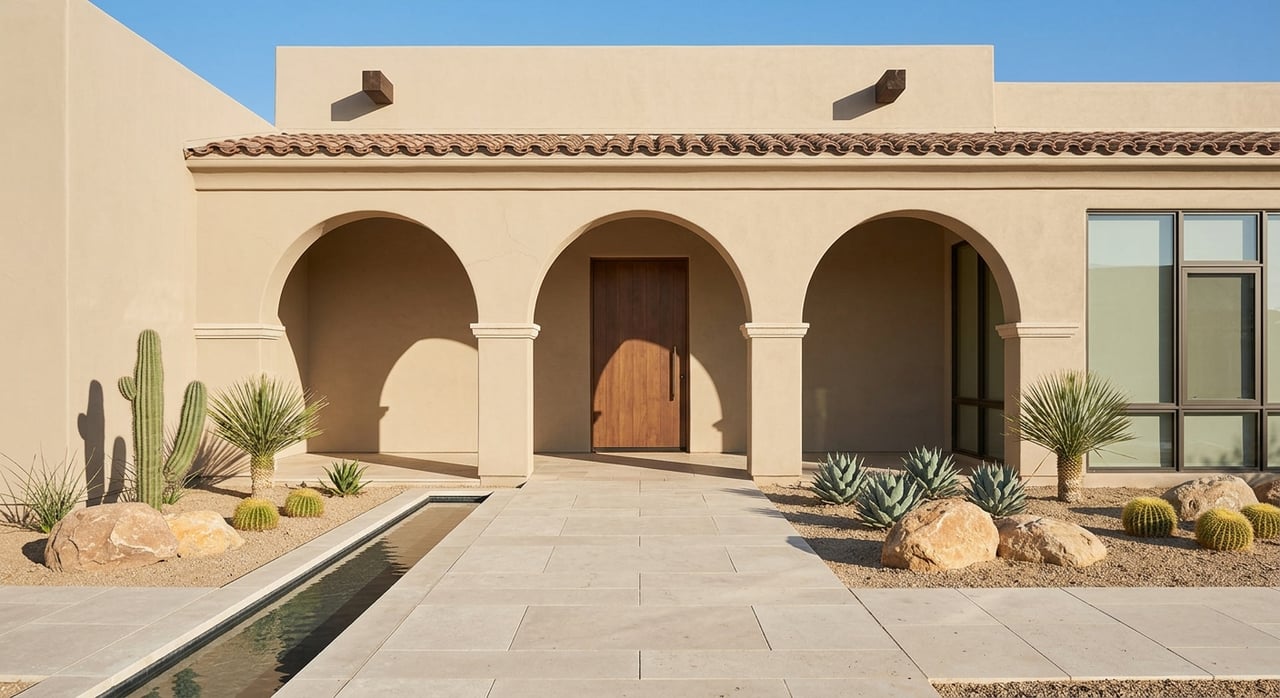
If you tour luxury homes in Scottsdale, you will quickly notice that the architecture often feels tied to the land. That is not by accident. In this market, style is shaped by desert climate, mountain views, larger homesites, and a long design tradition that values shade, outdoor living, and a low visual impact on the landscape. If you are buying or selling, understanding those style cues can help you read a home more clearly and see why certain properties stand out. Let’s dive in.
Why Scottsdale Homes Look Different
Scottsdale has a strong local design framework, and it helps explain why many luxury homes feel so rooted in place. The city emphasizes design that responds to the Sonoran Desert’s climate, topography, vegetation, and major views, while also encouraging shade, shelter, and buildings that blend with the land. In more sensitive desert and mountain areas, Scottsdale’s Sensitive Design Program and ESL overlay also protect natural open space, washes, ridges, peaks, and native vegetation.
That local approach matters in luxury housing. In areas planned for lower density and larger lots, such as the Cactus Corridor and similar character areas, homes are often designed to sit lightly on the site while taking advantage of views and outdoor living. Instead of forcing a style onto the desert, many Scottsdale homes work with it.
Scottsdale Style Is Often Blended
One of the most useful things to know is that Scottsdale architecture is not always pure or easy to label. The city’s historic documentation notes that style categories often overlap, and mixed or hybrid forms are common. That means a home may combine contemporary massing with Southwestern materials, or revival details with a cleaner, more modern layout.
This is especially helpful when you are house hunting. Rather than focusing only on the listing label, it makes more sense to look at how the home is composed, how it handles light, and how it connects indoor and outdoor spaces. In Scottsdale, the lived experience of the architecture often matters more than the textbook category.
Contemporary Desert and Southwest Modern
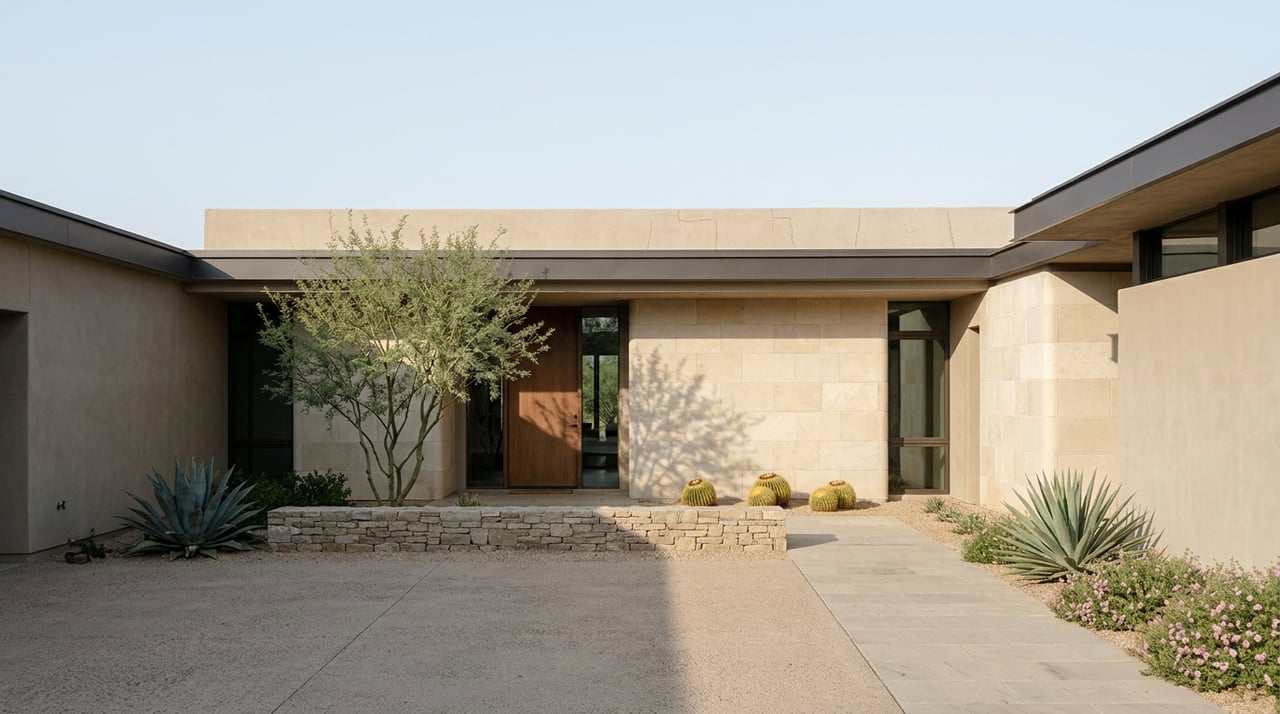
For many buyers, this is the Scottsdale luxury look that comes to mind first. While “contemporary desert” is more of a market term than a formal city label, it often overlaps with the city’s Contemporary and Southwest Modern categories. Scottsdale describes Contemporary homes as having low or very low roofs, horizontal emphasis, clerestories or window walls, and varied facade materials, while Southwest Modern tends to feature smooth stucco, limited ornament, flat roofs, tall openings, and custom metal details.
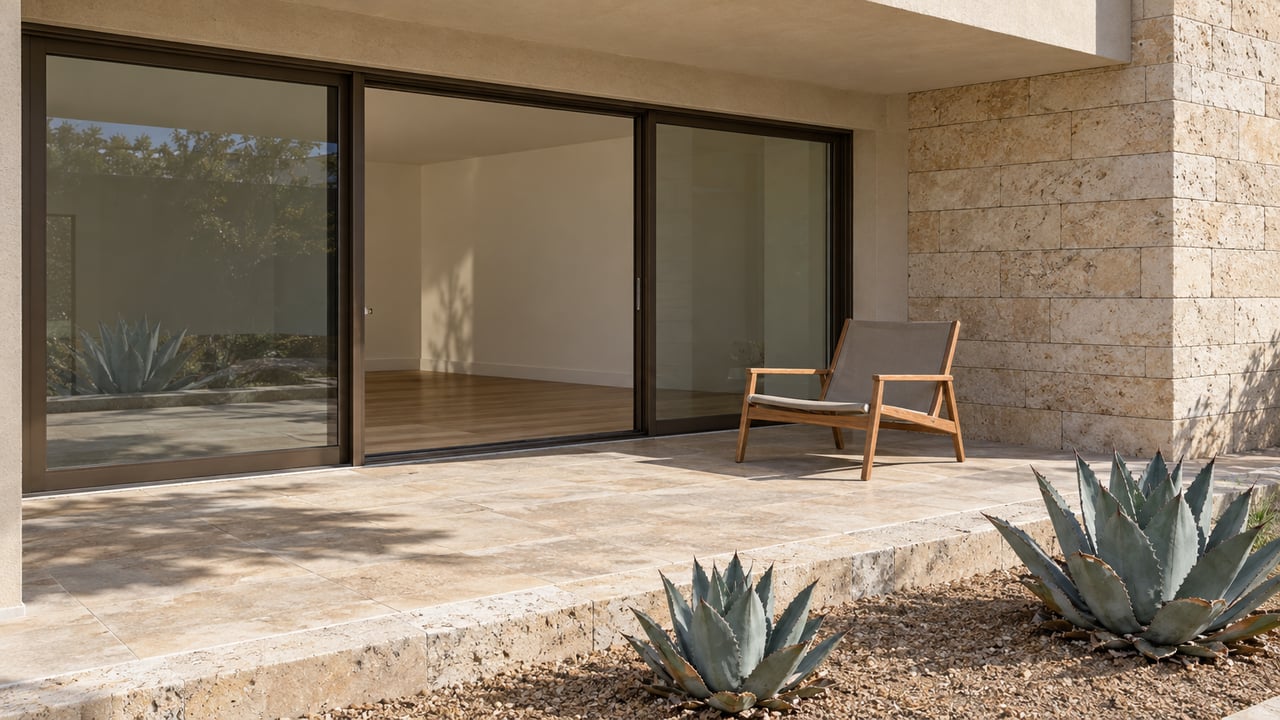
In practical terms, this style is about simplicity, openness, and connection to the outdoors. You will often see expansive glass, shaded patios, restrained materials, and a plan that frames mountain or desert views instead of closing them off. These homes tend to feel calm, bright, and highly intentional.
Scottsdale’s own historic references show where this design logic comes from. The city’s postwar documentation explains that Ranch and California Ranch were common starting points, while Contemporary homes evolved as a more progressive alternative, with low profiles, shallow roofs, and extensive glass that linked interior and exterior space.
What to look for
When you tour a desert contemporary or Southwest Modern home, watch for these details:
- Low-slung massing
- Strong horizontal lines
- Large windows or glass walls
- Clerestory windows
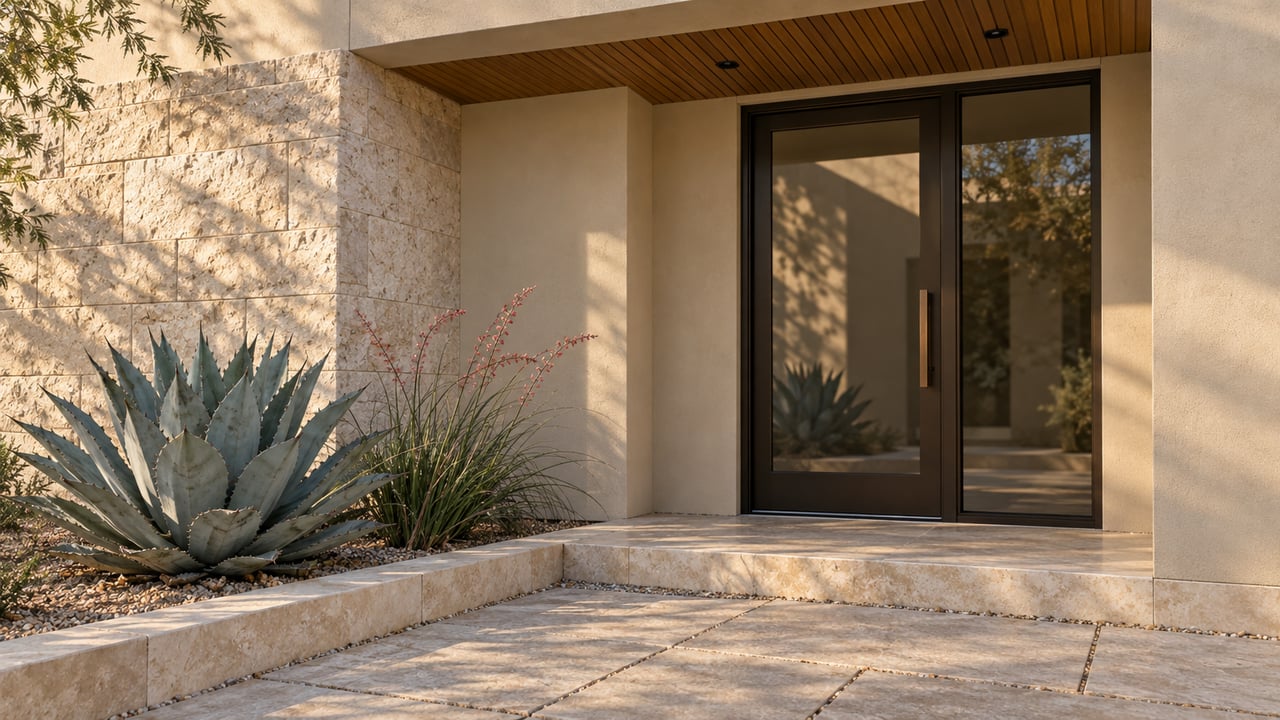
- Smooth stucco and minimal ornament
- Patios and outdoor rooms designed for shade and flow
A strong local reference is Town and Country Scottsdale, where the city describes low-profile homes with large windows, patio-ports, masonry surfaces, and an emphasis on indoor-outdoor living.
Territorial and Territorial Revival
If contemporary homes feel crisp and glass-forward, Territorial homes often feel more grounded and quiet. Scottsdale’s postwar architectural guide describes Popular Territorial as a flat-roofed or parapet style with brick or slump-block walls, possible shed roofs over entries or windows, and rectilinear or arched openings. Brick coping and corbelling may also appear.
This style tends to appeal to buyers who want a Southwestern look without the visual complexity of some revival designs. It can feel earthy, stable, and very appropriate to the desert. In the luxury market, Territorial-inspired homes often use simple forms and natural-looking materials to create a strong connection to the setting.
What to look for
Key cues in Territorial and Territorial Revival homes include:
- Flat roofs or parapets
- Brick, block, or stucco surfaces
- Clean, rectilinear forms
- Select arched openings
- A restrained, low-profile street presence
Because Scottsdale values design that respects topography and native desert character, this style can work especially well on larger lots where the architecture is meant to complement, not dominate, the site.
Modern Mediterranean and Monterey Revival
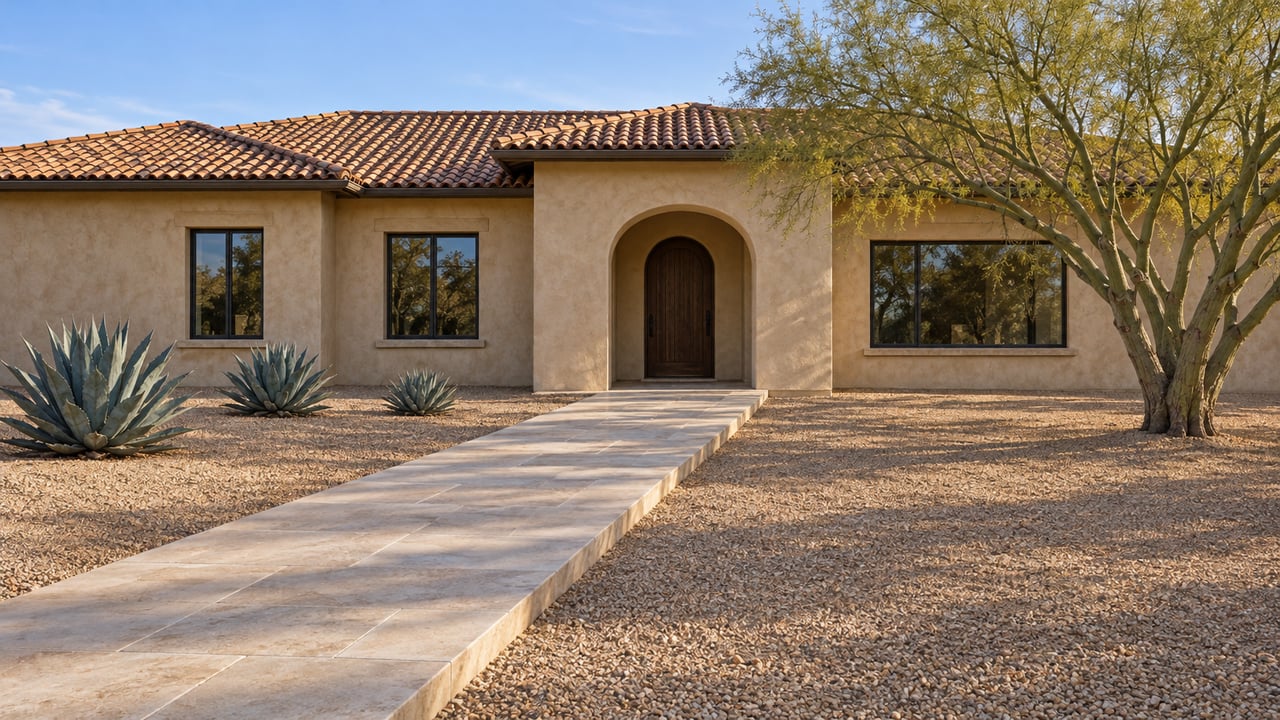
Another style you will see in Scottsdale luxury homes is what many buyers call modern Mediterranean. In the city’s own vocabulary, that generally aligns with Monterey or Mediterranean revival. Scottsdale describes this category as featuring low-pitched red tile roofs, stucco or plaster walls, balconies or balconets, towers or projecting bays, arched openings, and wrought-iron trim.
These homes usually present a more formal and decorative exterior than desert contemporary properties. They often have a stronger sense of symmetry, more visible rooflines, and classic revival details that create warmth and presence from the street. In luxury neighborhoods, this style is often updated with larger windows, more open interiors, and outdoor living spaces that better fit how people live today.
Scottsdale also has a long local history of revival blending. The city’s Villa Monterey documentation notes that homes there borrowed from Spanish Colonial, Territorial, Mission, Monterey, Mediterranean, and Pueblo traditions. That mix helps explain why many Scottsdale homes show revival influences without fitting neatly into just one category.
What to look for
In Mediterranean or Monterey-influenced homes, common features include:
- Red tile roofs
- Stucco or plaster walls
- Arched windows or doorways
- Balconies or balconets
- Wrought-iron details
- Towers, bays, or more sculpted roof forms
Mid-Century Influence Still Matters
Even when a luxury home is newly built or recently remodeled, you can still see Scottsdale’s mid-century influence. The city’s Historic Preservation Program recognizes several postwar residential districts, including Town and Country Scottsdale and Villa Monterey Units 1-7, as important examples of the area’s architectural vocabulary.
That history matters because many of today’s luxury homes still follow the same underlying ideas. Low profiles, strong horizontals, large windows, patios, and a close relationship between house and landscape are not just trends here. They are part of Scottsdale’s long-running design language.
What to Notice on a Home Tour
If you are trying to understand a Scottsdale luxury home beyond the finish selections, focus on a few core architectural clues.
Study the massing
Start with the shape of the home. Low profile, low-slung forms often point to Contemporary, Ranch-related, or Southwest Modern design. More vertical forms, towers, or pronounced rooflines may suggest Mediterranean or Monterey influence.
Watch the roofline
Roof shape tells you a lot. Flat or parapet rooflines often signal Territorial or modern desert design, while low-pitched tile roofs are a classic revival cue. In Scottsdale, rooflines also affect how a home sits against the horizon and frames distant views.
Look at the windows
Large glass walls, clerestories, and minimal trim often point toward contemporary design. Arched openings and more formal window patterns usually suggest Mediterranean or Monterey influence. Either way, the best homes use windows to capture light while supporting privacy and shade.
Pay attention to outdoor rooms
Patios, courtyards, and patio-ports are especially important in Scottsdale. The city’s design history repeatedly ties these spaces to climate-responsive living, where outdoor areas feel like true extensions of the home. In the luxury market, these features often become some of the most valuable parts of the property.
Read the materials in context
Smooth stucco, block, brick, metal, and glass can appear across multiple styles. What matters is how those materials are composed. A home with simple walls, minimal ornament, and large glass openings will feel very different from one with arches, tile roofing, and wrought-iron accents, even if both use stucco.
Why Style Matters for Buyers and Sellers
For buyers, architectural style helps you narrow your search based on how you want a home to live. Some people are drawn to the openness and clean lines of desert contemporary design. Others prefer the grounded character of Territorial homes or the warmer formality of Mediterranean-inspired architecture.
For sellers, style affects positioning and presentation. When a home’s architecture is clearly understood, it is easier to market its strengths, from view orientation and indoor-outdoor flow to material choices and historical influence. In a design-conscious market like Scottsdale, those details can shape buyer perception in a meaningful way.
The Scottsdale Takeaway
Scottsdale luxury architecture is best understood through the desert. Whether a home leans contemporary, Territorial, Mediterranean, or a blend of styles, the strongest properties tend to share a few traits: a respect for the site, thoughtful handling of light and shade, and a clear connection between indoor and outdoor living.
If you are evaluating a home in Scottsdale, the goal is not just to name the style. It is to understand how that style supports the way you want to live, entertain, and experience the property every day. If you want expert guidance on buying or selling an architecturally distinctive home in Scottsdale, connect with the Kapanicas Group.
FAQs
What architectural styles are common in Scottsdale luxury homes?
- Scottsdale luxury homes often show Contemporary or Southwest Modern, Territorial or Territorial Revival, and Mediterranean or Monterey Revival influences, with many homes blending more than one style.
How can you identify a contemporary desert home in Scottsdale?
- Look for low-slung massing, horizontal lines, large windows or glass walls, clerestories, smooth stucco, minimal ornament, and strong indoor-outdoor connections.
What defines a Territorial-style home in Scottsdale?
- Territorial-style homes in Scottsdale often feature flat roofs or parapets, brick or block walls, simple forms, restrained detailing, and a grounded Southwestern feel.
What features suggest Mediterranean influence in a Scottsdale home?
- Red tile roofs, stucco walls, arched openings, balconies, wrought-iron details, and more formal exterior composition are some of the clearest Mediterranean or Monterey Revival cues.
Why do Scottsdale luxury homes emphasize outdoor living?
- Scottsdale’s design context places a strong focus on climate, shade, views, and desert-sensitive siting, which helps explain why patios, courtyards, and outdoor rooms are so central to many homes.
Why does architectural style matter when buying or selling in Scottsdale?
- Style affects how a home feels, how it functions, and how it is positioned in the market, especially in Scottsdale where buyers often pay close attention to design, site orientation, and indoor-outdoor living.